The Slow Shake: What You Lose When a Bar Batches for Speed
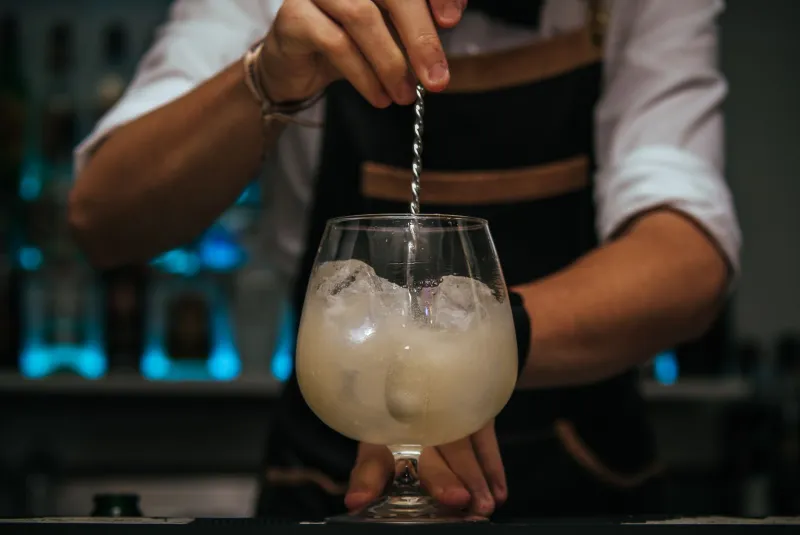
There is a particular sound a good bar makes when it is working properly. Not the clatter of a blender or the hiss of a gun, but the dry rattle of ice in a shaker, the soft thud of a glass meeting a coaster, the short silence while somebody measures by eye and gets it right. In a lot of Japanese bars, that rhythm is the whole point. Nothing is poured ahead. Nothing waits in a bottle in the fridge with a date sticker on it. Every drink is a single act, made once, for one person.
It looks like the slowest possible way to run a bar. It is often the fastest route to a drink worth remembering.
One order, one build
The Japanese approach to cocktails is not really a technique so much as a discipline. Fresh ice, cracked or carved to suit the glass. Spirit, vermouth, bitters measured at the moment of order rather than in a litre jug at 4pm. A shake or stir timed to the second, not to the length of the queue. The bartender works in front of you, in a sequence you can follow, and the drink arrives as the conclusion of that sequence rather than a thing retrieved from a shelf.
You may have seen this and mistaken it for theatre. It isn't. Theatre is a flourish for its own sake. This is closer to a chef refusing to pre-plate. The reason a cocktail built to order tastes better is unglamorous: dilution is right, temperature is right, and the balance hasn't had an hour to drift. A drink assembled at speed in advance is a drink that has already begun to change by the time it reaches you.
What batching quietly costs
Let's be fair to the UK bar that batches. Pre-mixing is a sensible answer to a real problem: a packed Friday, two staff on the well, a drinks list built for volume. Nobody is being lazy. But something gets traded away, and it's worth naming.
Batching moves a cocktail from made to assembled. The difference shows up in texture first — a pre-diluted drink often arrives thin or, worse, flabby, because the water was added on a schedule rather than to a shaker. It shows up in temperature second, since a bottle from the fridge has none of the bite of a drink shaken hard over fresh ice. And it shows up in the room third. When every drink is a pour and a garnish, the bar stops sounding like a bar and starts sounding like a service counter.
None of this means a busy venue should abandon speed. It means the trade-off is real, and worth being honest about on the menu rather than hidden behind the word house.
The tell-tale signs of a bartender who still means it
You can usually spot the difference before you taste it. Watch for these.
- The ice gets touched. If the cubes are chosen or carved for your glass rather than scooped from a bin on autopilot, someone is paying attention.
- The shaker is weighed or counted. Not necessarily with scales, but with rhythm — a shake that has a beginning, a middle and an end rather than a vague rattle.
- Your drink isn't the third one in a row. A made-to-order bar builds one round at a time. If four identical cocktails land within seconds of each other, they were probably waiting somewhere.
- The garnish is cut now. A twist of citrus that still smells of the fruit is a small thing that tells you a lot.
- They taste before they serve. A quick check with a straw or a spoon is the quietest possible statement of intent.
Why the room calms down
Here is the part that surprises people. Building drinks one at a time doesn't just improve the drink; it changes the atmosphere. When the bartender is working deliberately, guests tend to match that pace. The bar gets a little quieter. Orders get a little more considered. People stop shouting over the pass because there's something worth watching instead.
That's the ikigai of the whole thing, really — a reason to linger rather than a reason to rush. A bar that makes each drink individually is telling you, without saying it, that you're not a ticket number. In a UK high street full of venues optimised for turnover, that's a surprisingly rare message.
How to find it without a guidebook
You don't need a famous address. Look for the smaller room, the shorter list, the bartender who looks at the shaker rather than the till. Ask what they'd make you if you gave them one word — citrus, smoke, something bitter — and see whether they build it or reach for a bottle. Order a second drink and watch whether the first one's ghost is still sitting there in a jug.
You'll know within ten minutes. The drink will be colder, tighter, and somehow more itself. And you'll probably stay for one more, which was the point all along.