Order Small, Stay Long: The Quiet Arithmetic of a Better Night Out
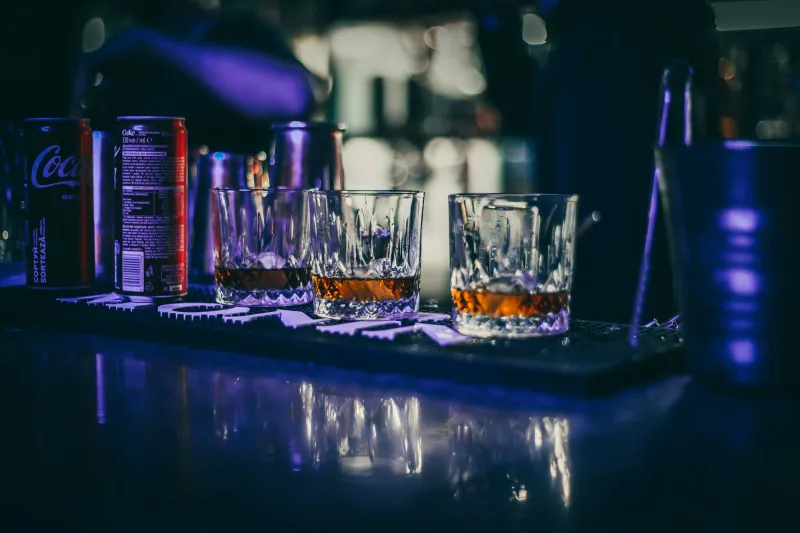
There is a particular kind of UK bar menu that treats size as a virtue. The cocktail arrives in a vessel closer to a vase than a glass, the ice stack looks load-bearing, and the first sip is genuinely thrilling. Forty minutes later, the thrill has curdled into a sort of liquid admin. You are no longer drinking for pleasure; you are drinking to finish.
That is not a moral failing. It is arithmetic. A bigger, stronger drink takes longer to get through, dulls the palate faster, and quietly removes the small decisions that make a night out feel like a night out. Another drink? Another plate? A coffee? A walk to the next place? When one glass occupies the whole table, the evening has fewer hinges. It swings open once and then just stands there.
The short pour — the half measure, the highball, the deliberately modest cocktail — is not an attack on pleasure. It is a way of keeping pleasure available for longer. In Japanese bar culture, that idea is less a trend than a default setting. The glass is sized for conversation, not conquest.
The maths of the second drink
A cocktail is not only alcohol. It is temperature, dilution, glassware, garnish, and the small ceremony of the first sip. Those things do not need volume to work. In fact, they often work better in a smaller format. A drink that stays cold and lively to the last mouthful is more generous than a bucket that goes warm and flat halfway down.
There is also the question of pace. A lower-ABV highball — whisky and soda, shochu and soda, a long drink built with plenty of ice — lets you stay in the room without leaving the conversation. You can order a second one without doing sums. You can eat another small plate without wondering whether you have already crossed a line. The night keeps its shape.
This is not about pretending alcohol is something it is not. It is about recognising that the strongest drink on the menu is not automatically the best one for a two-hour dinner, a catch-up with a friend, or a Tuesday when tomorrow still exists. In 2026, plenty of UK drinkers are already thinking this way. They want flavour, ritual, and a bit of polish — not necessarily a pint of negroni.
Why Japan's bars make room for the short pour
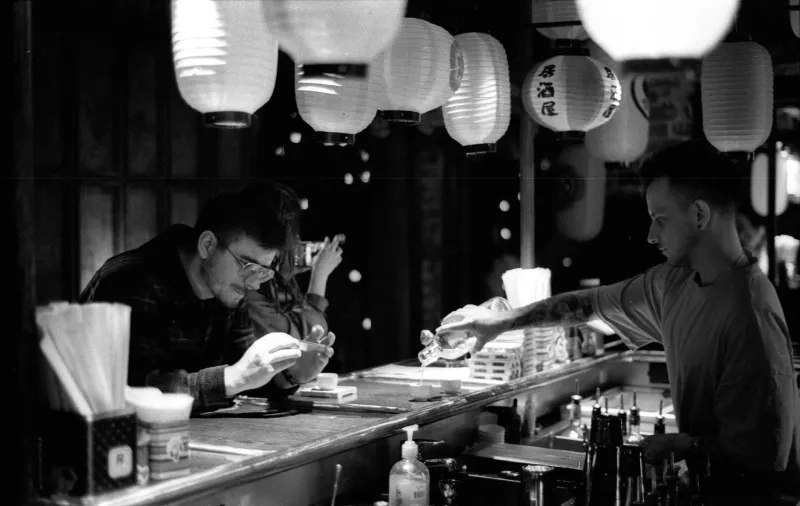
Walk into an izakaya and you will see the pattern everywhere. Beer arrives in a modest glass. Highballs are long on ice and short on drama. Shochu is served with water, or tea, or soda, and the point is not to test your tolerance but to keep the table company. The drink is a companion to the food, not a challenge issued to the evening.
The same logic runs through Japanese home drinking. A mizuwari — shochu cut with water — is not a compromise. It is a considered drink, built for a long meal and a clear head. The highball, done properly, is not a shortcut either. It is a study in balance: carbonation, dilution, temperature, and a clean finish that makes the next bite of food taste better.
That is the part UK bars sometimes miss when they borrow Japanese ideas. They take the aesthetic — the ice, the glassware, the clean lines — but keep the British instinct that more is more. The result can look Japanese and drink like a fairground. The short pour is the less photogenic half of the lesson, and arguably the more useful one.
What UK bars can borrow without turning into a theme park
The practical version is refreshingly simple. Offer a smaller cocktail alongside the full-size version, and price it so it does not feel like a penalty. Build a highball list with proper ice and a few low-ABV options. Make water visible and easy. Let the small plates arrive in waves rather than all at once, so the table has a reason to keep ordering — and the drinks have a reason to keep pace.
A half-pour menu is not an invitation to nurse one drink for three hours. It is an invitation to stay in the rhythm. Order a short cocktail, eat something salty and crisp, talk for twenty minutes, order another. The evening becomes a series of small arrivals rather than one enormous departure. That is closer to how a good izakaya works: the table is never quite finished, but it is never overwhelmed either.
For a two-hour dinner, this is transformative. A big cocktail at the start can make the middle feel fuzzy and the end feel like a sprint. A shorter, lower-ABV drink keeps the edges sharp. You notice the second plate more. You remember the conversation. You can still walk home with your dignity and your appetite intact.
The ritual is not the volume
The first sip of a well-made highball is every bit as ceremonial as the first sip of a martini. The glass is cold. The ice cracks. The soda settles. The garnish — a twist, a slice, a single leaf — does its small piece of theatre. None of that requires a drink the size of a flowerpot.
At Bar Ikigai, the point is not to drink less for the sake of it. It is to leave room for the rest of the night. A shorter drink can make a longer evening: more conversation, more small plates, more chances to notice where you are. The glass does not need to be big to hold the occasion. It only needs to be good.