The First Thirty Seconds: How a Hot Towel and a Cold Glass Set the Whole Night's Course
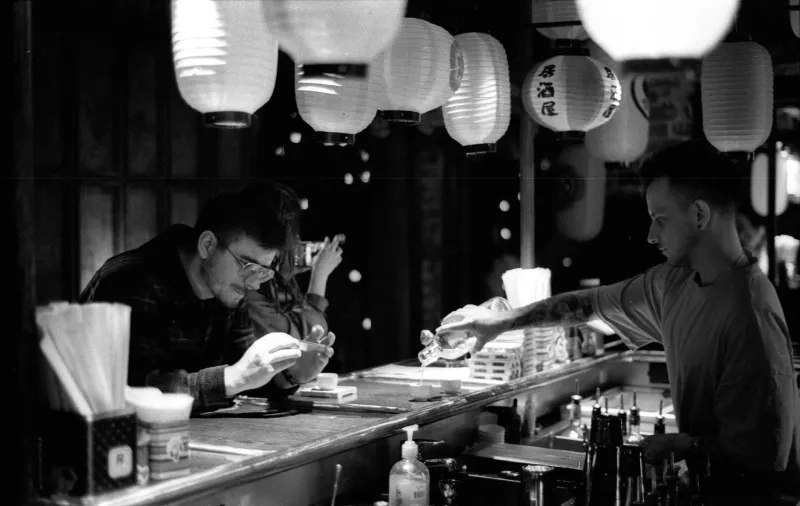
You sit down. Before you have decided between a highball and something with gin, a small rolled towel lands beside your hand. It is warm, damp, faintly steamy. A glass of water follows. No ceremony, no explanation, no line on the bill. In a good Japanese bar, this is not a signature move. It is the opening line.
In the UK, we tend to treat the start of a night out as admin: find a table, catch the server's eye, order quickly, get the first drink in. The hot towel and the water work differently. They ask you to arrive before you order. They say the bar has noticed you, and that there is no rush. In 2026, when so many venues are selling 'experience' with smoke, screens and theatre, the most effective hospitality in the room may still be the cheapest.
The welcome before the welcome
The towel is called an oshibori. In Japan, it has been part of hospitality for centuries, folded and offered at inns, tea houses and restaurants long before the modern cocktail bar existed. It is not a gimmick. It is a small, practical gesture: clean hands, a fresh start, a moment of care before the business of eating and drinking begins.
That is the part UK bars often miss. An oshibori is not impressive in the way a dry-ice garnish is impressive. It does not photograph especially well. It will not trend. But it changes the temperature of the interaction. You have been handed something before you have spent anything. The bar has given first.
At a counter seat, the effect is even clearer. The towel gives your hands something to do. It gives the room a beat. It lets you look around without feeling like you are waiting to be served. In a small bar serving Japanese plates, that beat matters. The night is meant to unfold in courses, not arrive all at once.
A hot towel does more than clean your hands
A warm towel is a physical cue. It asks you to slow down, put your phone face down, and settle into the seat. It is the bar equivalent of a host taking your coat. Nothing has been ordered, but the evening has already begun.
There is a practical side, too. After a commute, a cold walk or a crowded train, a hot towel is a small reset. It makes the counter feel prepared for you. It suggests that someone thought about the thirty seconds before your first drink, not just the drink itself.
Good bars understand that the opening sets the pace for everything after. If the first moments are rushed, the rest of the night tends to be rushed as well. If the first moments are calm, you are more likely to order a second small plate, a second cocktail, and stay a little longer. The towel is not the reason you linger. It is the invitation to.
The glass of water is the first cocktail
Not literally, of course. But in many Japanese bars, water arrives before you have ordered, sometimes alongside a small snack. It is not a upsell and it is not an afterthought. It is a baseline. It says: we are not going to push you into a drink before you are ready.
In the UK, water often arrives only when you ask, or when the meal is nearly over. That is a small thing, but small things add up. A glass of tap water is the cheapest hospitality in the building and one of the most telling. It costs pennies. It makes the bar feel generous rather than transactional.
It also makes practical sense. If you are going to drink two or three cocktails and eat a handful of Japanese small plates over a couple of hours, water is not a side note. It is part of the service. It helps you pace yourself. It clears the palate between a salty dish and a delicate one. It keeps the night from tipping into a sprint.
A bar that brings water without being asked is a bar that is thinking about the whole evening, not just the first round.
What the UK gets wrong about 'experience'
British bars have become very good at drama. There are cocktails served under cloches, drinks that arrive smoking, menus that unfold like letters, and lighting designed for photographs. None of that is bad. A bit of theatre can be fun, and a night out should feel like an occasion.
But experience does not start with the signature serve. It starts with whether you feel welcome before you have spent a penny. A bar can spend thousands on a cocktail's presentation and still make you feel like a transaction when you walk through the door. A hot towel and a glass of water do the opposite. They are low-cost, low-tech and quietly effective.
They are not a substitute for good food or drink. A warm towel cannot rescue a flat cocktail, and cold water will not make a dull plate taste better. But they are the grammar of the night. They tell you what kind of evening this is going to be: unhurried, attentive, human.
In a British city, where the pub is the default and the cocktail bar can feel like a special occasion, that grammar matters. It bridges the gap between a quick drink and a proper night out. It makes a small bar feel generous rather than exclusive.
How to spot a bar that understands the opening
You do not need a checklist to notice it. You can feel it in the first minute. The towel is warm, not scalding. The water arrives in a clean glass, without a performance. The menu is placed where you can reach it, not snatched away. Someone makes eye contact. Nobody asks if you are ready to order before you have had time to sit down.
These are not grand gestures. They are the sort of details that separate a bar you tolerate from a bar you return to. They also make a difference to how you order. When you feel settled, you are more likely to ask questions, try something unfamiliar, and let the evening take its time.
A short guide to starting your night out with care
If you are choosing where to go, look for a bar that starts you properly. A place that brings water without being asked and offers a small warm towel is likely to be a place that pays attention to the rest of the night too.
If you are hosting at home, borrow the habit. A warm flannel and a glass of water before the first drink cost almost nothing and change the mood of a room. You do not need a full Japanese bar set-up to be thoughtful.
When you order, resist the urge to fill the table immediately. Start with one or two small plates and a cocktail. Let the water sit alongside them. Leave room for a second wave. The point of a Japanese-inspired night out is not to get through the menu. It is to give the evening somewhere to go.
And if you find a bar that understands the first thirty seconds, stay a little longer. That is the whole idea.
The small things are the night
A signature cocktail is remembered for a minute. A hot towel and a cold glass of water are remembered as a feeling. They say that you were expected, that the counter was ready, and that nobody is trying to rush you out before you have begun.
That is not a gimmick. It is care, made visible. And in a bar serving Japanese small plates and cocktails, it is the best possible reason to linger.