Lean, Sip, Leave: The Quiet Genius of the Standing Bar
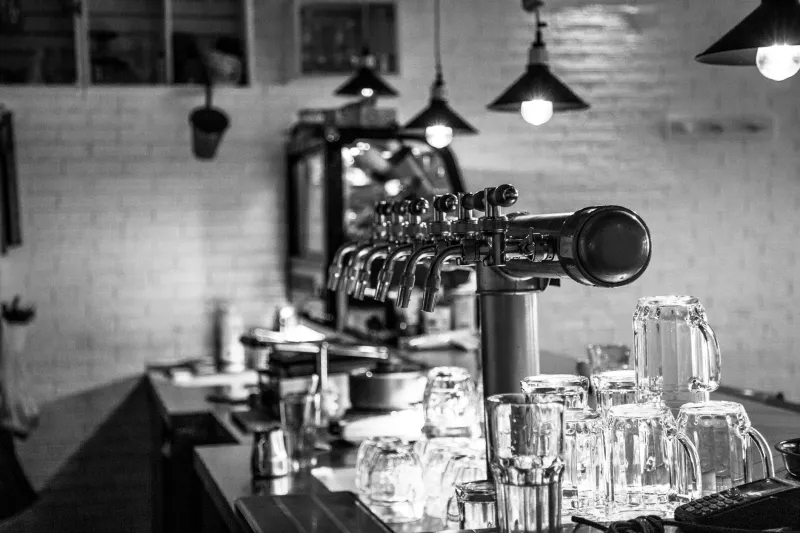
There is a very British sequence of events that turns a simple pint into a logistical exercise. Someone creates a group chat. Someone else suggests a place that takes bookings. A deposit is paid. A table is held for 7.30pm, which means arriving at 7.25pm, which means leaving work early, which means the whole thing now has a timetable. By the time you sit down, the drink you wanted has become an appointment.
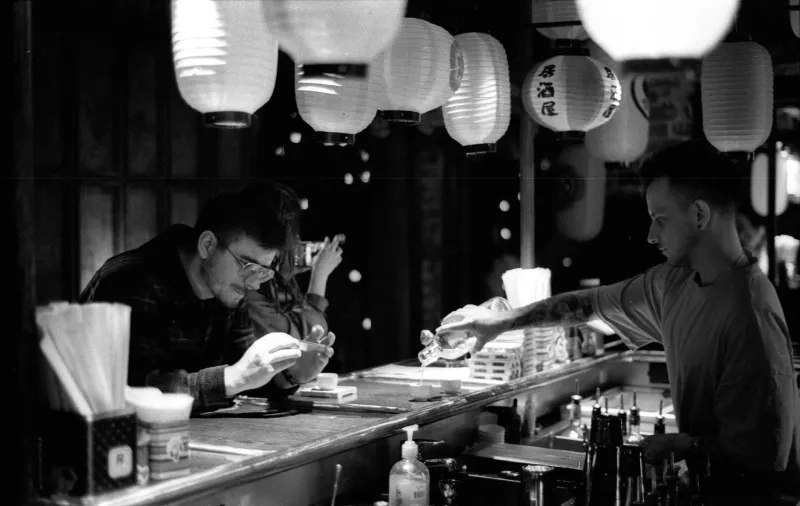
The tachinomi — Japan’s standing bar — quietly refuses all of that. You walk in, you stand at a counter or a ledge, you order a drink and maybe a couple of small plates, and you are back on the street before the ice has had time to disappoint you. It is not an event. It is a pause. And for a UK drinking culture that has spent the past decade making going out feel more and more like project management, there is something genuinely useful in that.
The booking trap
Let’s be fair to bookings. They have their place. A birthday, a big group, a restaurant where the kitchen needs to know what it is doing — all of these benefit from a bit of forward planning. But somewhere along the way, the reservation became the default setting for any night out involving more than two people. And the default setting has a cost. It locks you in. It makes the evening feel like a commitment rather than an invitation. It also makes the bar responsible for your good time in a way that nobody really asked for.
Tachinomi flips that. There is no table to hold, no slot to fill, no deposit to lose. You turn up because you are passing, or because a friend texted ten minutes ago, or because the train is delayed and the alternative is staring at the departures board. The bar does not need you to stay for three hours. It is quite happy if you stay for twenty minutes. That absence of expectation is precisely what makes it sociable. You are not performing a night out. You are just having a drink.
Why standing changes the maths
Standing is not a gimmick in a tachinomi. It is the mechanism. When you are on your feet, the visit has a natural shape. You perch, you order, you talk to the person next to you or you don’t, and then you go. Nobody is settling in for the long haul. Nobody is guarding a table. The bar can turn over seats — well, standing spots — without anyone feeling rushed, because nobody came for a three-course linger.
That changes the social dynamic too. Sitting at a table with a group can be lovely, but it can also be a closed loop. Standing at a counter is more porous. You catch fragments of conversation. You ask the person beside you what they are drinking. You might end up sharing a plate with a stranger, or you might not. Either way, the barrier to a small interaction is lower. In Japan, this is part of the fabric: the tachinomi is often a modest, brightly lit place attached to a liquor shop, where the point is a quick drink and a bite, not a scene.
There is also the matter of money. A standing bar with a short menu and a short visit is an affordable night out by design. You are not paying for the room, the linen, or the sense of occasion. You are paying for a drink and a plate. In a UK where the cost of going out has become a genuine consideration for a lot of people, that is not a small thing. The quick one is not a lesser version of a night out. Sometimes it is the only version that makes sense.
Small plates, short visits
The food matters here, but not in the way it does at a restaurant. In a tachinomi, the menu is usually short and built for speed: something salty, something pickled, something grilled quickly, something that goes with beer or a highball. It is not a tasting menu. It is a supporting act that happens to be very good at its job.
That is a useful model for UK bars in 2026. The temptation, when borrowing from Japanese drinking culture, is to overdo it. We have all seen the places that turn a standing bar into a piece of theatre: the forced standing-only policy, the staff in costume, the menu that reads like a design brief. It misses the point.
The tachinomi works because it is unpretentious. The plates are simple. The drinks are cold. The room is not trying to be anything other than a place to stand and have one. If a UK bar wants to borrow the format, the first thing to borrow is that restraint.
What UK bars can borrow — and what they shouldn’t
The best thing a British bar can take from the tachinomi is the permission to be small and quick. A short menu of Japanese-inspired small plates — edamame with a proper pinch of salt, a couple of skewers, a pickled thing, maybe a bowl of rice — is enough. It does not need to be a full izakaya offering. It needs to be food that arrives fast, tastes good standing up, and does not require a knife and fork.
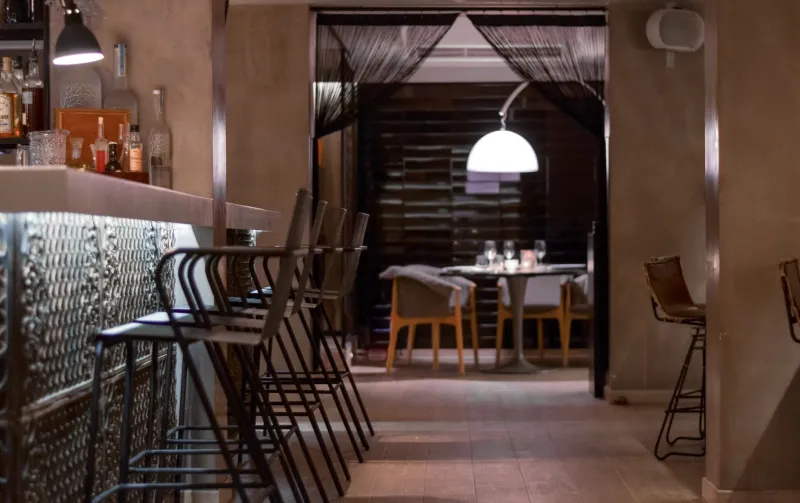
The second thing is the layout. A ledge by the window. A counter along the wall. A few hooks for coats. Standing bars do not need much space, which means they can fit into the kind of narrow, awkward units that UK high streets are full of. That is an opportunity, not a compromise.
The third thing is the pricing. A tachinomi is not a budget venue in a grim sense. It is a place where the low ticket price is part of the hospitality. You can have one drink and one plate and feel welcome. You can have three and feel equally welcome. The bar does not make you feel like you have to justify your visit with a certain spend. That is a cultural shift worth importing.
What should UK bars not borrow? The gimmick. Standing should not be enforced as a quirky rule. It should be the natural consequence of a small room and a short menu. If there are a few stools, fine. If someone wants to sit, let them. The point is not to make standing a schtick. The point is to make the quick one feel like a legitimate way to spend an evening.
The quick one, done properly
There is a version of the British night out that is all anticipation and no ease. The tachinomi offers something gentler: a drink, a plate, a bit of company, and then home at a reasonable hour. It is not a rejection of the long night. It is an alternative to it. And in 2026, with everything costing more and everyone feeling a bit more protective of their time, that alternative looks less like a compromise and more like a quiet improvement.
Bar Ikigai’s own philosophy is built around the idea of a reason to linger. The tachinomi is a reminder that lingering is not always about duration. Sometimes it is about attention. You stand, you sip, you eat something small and good, and you leave feeling like you actually had a night out. That is not a gimmick. That is just good hospitality, with the chairs taken away.