No Asterisk Needed: Why Alcohol-Free Cocktails Belong on the Main Menu
There is a particular look that crosses a bartender's face when someone orders from the bottom of the menu. You know the section. It is usually set in smaller type, tucked under a heading like Softs or No ABV, and it lists three drinks that read like afterthoughts: a lemonade, a berry concoction, and something with elderflower that has been described as refreshing since roughly the dawn of time. The drink may be fine. The performance around it is not.
That small piece of theatre matters. In a good bar, ordering a cocktail is a little transaction of trust. You choose something, the bartender builds it, and the glass arrives looking as if someone thought about it. Alcohol-free drinks deserve that same vote of confidence. Not because every night needs a moral attached to it, and not because Dry January needs a longer victory lap. Simply because a bar that cares about flavour, texture and the pleasure of lingering should care about the whole menu, not just the section with the spirits.
The apologetic section problem
Too many UK bars still treat the alcohol-free list as a filing cabinet for people who are not really the target audience. The drinks are often built in a hurry, poured into whatever glass is nearest, and garnished with a slice of something that has seen better days. The message, unintended or not, is that the person who ordered it is waiting for the real evening to begin.
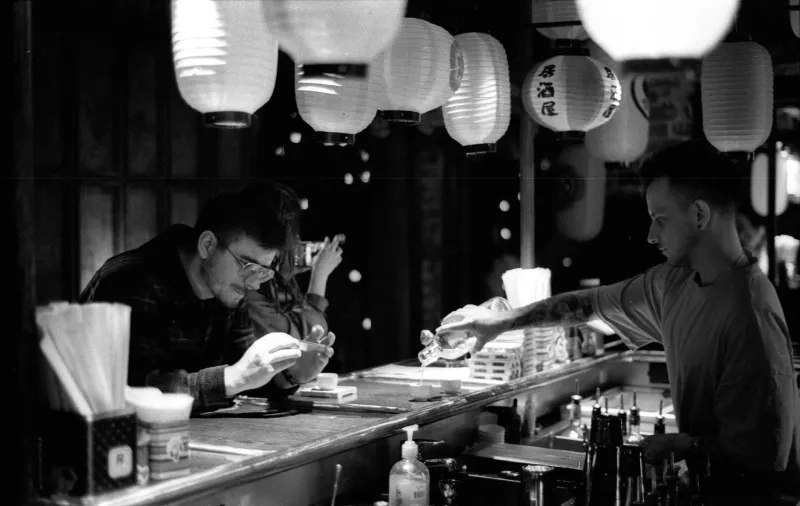
That feels especially odd in a Japanese-inspired bar. The whole point of the izakaya model is that the drink is not separate from the food, and the food is not separate from the evening. A cold highball and a plate of something salty and grilled are in conversation. So are a citrus-forward aperitif and a bowl of edamame, or a savoury, lightly sparkling pour and a few pieces of fried chicken. If the alcohol-free option is built with the same intent, it can hold up its end of that conversation without needing a disclaimer.
Build it like you mean it
The first step is not exotic. It is technical. A zero-proof cocktail needs the same attention to temperature, dilution, carbonation and texture as any spirit-led drink. Maybe more, because there is no alcoholic heat to mask a flat pour or a clumsy balance of sweet and sour. Ice should be plentiful and clean. The glass should be chilled if the drink is meant to be cold. Citrus should be fresh, not a sad wedge from a prep tray. If there is a garnish, it should tell you something about what you are about to taste.
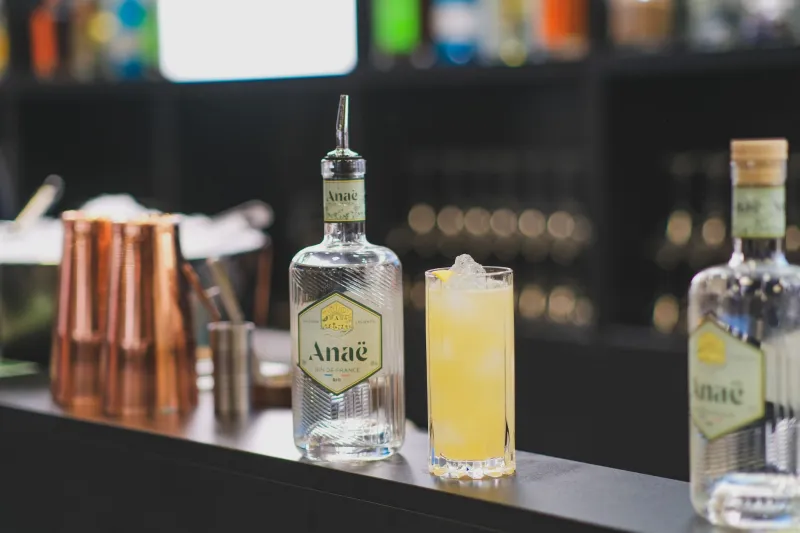
A proper alcohol-free highball is a good test. It can be as simple as a well-made botanical distillate, good tonic or soda, a squeeze of grapefruit, and a long, clear cube that gives the drink somewhere to go as it sits. Served in a chilled highball glass with a neat peel, it looks like a drink you would order on purpose. It also behaves like one: it stays cold, it keeps its fizz, and it gives you something to sip while the small plates arrive one by one.
A citrus aperitif that earns its seat
The same logic applies to the aperitif end of the menu. A citrus-forward zero-proof drink can do the work of waking up the palate before dinner without pretending to be gin. Think yuzu, grapefruit, a little bitterness from a tonic or a non-alcoholic aperitif, and a savoury edge from a pinch of salt or a rosemary sprig. It should be bright and dry rather than sweet and syrupy. It should make you want the next plate of food, not make you feel as if you are drinking pudding.
That is where the small plates come in. A crisp, bitter-edged alcohol-free aperitif is a natural partner for salty snacks, pickles, grilled skewers and anything with a little char. It cuts through richness and resets the palate. A softer, more savoury zero-proof highball can sit alongside tempura or fried food without fighting it. These are not compromises. They are pairings.
The seat is part of the serve
There is also the matter of where the drink is served. A zero-proof cocktail should not be handed over at the end of the bar as if it is being smuggled out. It should arrive at the same counter, in the same glassware, with the same explanation if one is needed. The person ordering it should get the same seat, the same pace, and the same assumption that they are here for a proper night out.
That last point is important. Many people are not avoiding alcohol because they are punishing themselves. They are driving, training, pregnant, on medication, taking a night off, or simply not in the mood. Some are doing it for a month. Some are doing it for good. The bar does not need to know the reason. It needs to make the drink good enough that the reason stops being the most interesting thing about the order.
Pace, not penance
A well-built zero-proof drink also changes the rhythm of an evening. It allows a table to stay longer without everything speeding up. It gives the person not drinking something to sip while the round is ordered. It means the night can stretch into one more small plate, one more conversation, one more ten minutes before the last train. That is not a niche benefit. It is the whole point of going out.
So put the alcohol-free drinks in the main menu. Give them proper names. List them beside the highballs and the sours. Train the staff to make them with the same muscle memory as everything else. Use the same ice, the same glassware, the same garnish tweezers if that is the house style. If the drink is good, nobody will feel as if they are missing out. They will feel as if they ordered well.
That is the quiet test of a bar. Not whether it can make a cocktail with alcohol in it, but whether it can make you feel like you chose the right drink, whatever is in the glass. A zero-proof cocktail that gets the same care as the rest of the menu is not an act of charity. It is just good hospitality, and it belongs on the counter with everything else.