Stop Ordering the Whole Menu: The Izakaya Habit That Fixes a British Night Out
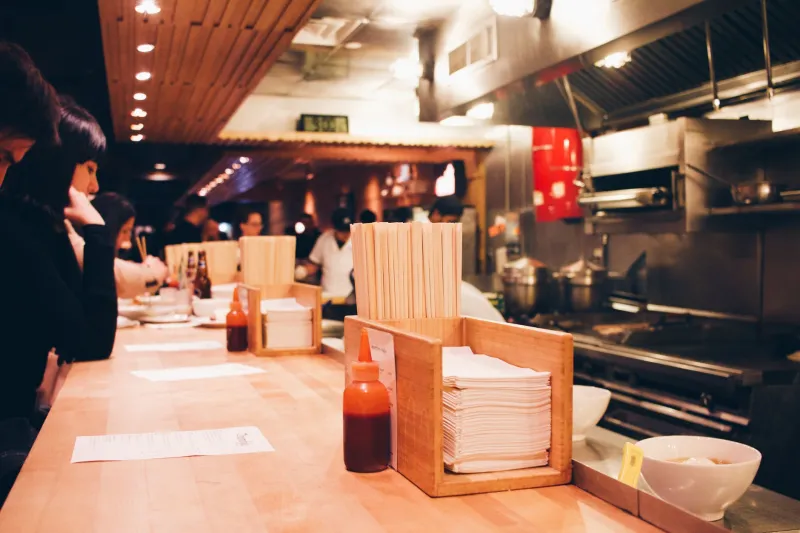
Photo: izakaya small plates table incremental ordering, via static.wikia.nocookie.net
There is a particular moment in a British restaurant when the table disappears. The menus go down, the order goes in, and then the plates arrive in a wave: starters, sides, mains, maybe a bowl of something nobody remembers choosing. By the time the conversation gets going, the food is going cold and the table is a game of Tetris. We have all been there. We have all pretended it was fine.
The izakaya does it differently. You order a couple of small plates. You eat them. You talk. You order another couple. The menu stays on the table, not because you are indecisive, but because the evening is allowed to unfold. It is a habit worth stealing.
The first round is not the whole story
British diners are trained to treat the first order as a contract. You commit early, usually before you have settled in. The result is a table full of food that arrives at the same time, whether or not it belongs together. A cold starter sits next to a hot main. The dish you were most excited about is finished before the drink you ordered to go with it.
In an izakaya, the first order is just the first order. It is a way to start, not a prediction of the whole night. You might begin with edamame and a highball. You might add sashimi when the mood takes you. You might finish with something grilled because the smell from the next table changed your mind. That is not chaos. It is a conversation between you, the kitchen and the clock.
Ordering in waves is not indecision
There is a British suspicion that people who order slowly are just bad at deciding. In a busy restaurant, it can feel like holding up the waiter or making the kitchen work harder. But incremental ordering is not about being fussy. It is about pacing. Japanese bars have built an entire style of eating around it because it solves a simple problem: food and conversation run at different speeds.
When you order in waves, the kitchen can send dishes as they are ready, not as a batch. You eat hot food hot. You drink at the pace you actually want. And you stay in the room, rather than disappearing into the admin of a three-course plan.
Hot food is a timing problem
Most small plates are not designed to sit under a lamp. They are designed to be eaten within a few minutes of leaving the pass. When a table orders everything at once, the kitchen has to choose between sending food before it is ready or holding it back until it is tired. Neither is good.
Ordering one or two things at a time gives the kitchen permission to cook at its own rhythm. It also gives you permission to eat at yours. You are not waiting for the whole table to be served. You are not watching a plate go cold while someone finishes a story. You are just eating, then ordering again. It sounds almost too simple, which is usually a sign that it works.
The bill stays honest
There is a quieter benefit, too. When you order as you go, you order what you actually want. You are less likely to over-commit at the start because you are worried about being hungry later. You are less likely to leave half a plate because your eyes were bigger than your appetite. And you are less likely to look at the bill and wonder where the extra dishes came from.
That does not mean you spend less. It means you spend on purpose. You might end up ordering more over the course of the night, but it will be because you wanted it, not because you panicked at the start. In a cost-of-living moment when every round counts, that feels like a small but genuine luxury.
How to order without feeling awkward
Start with two or three small plates and a drink. Tell the server you are going to order as you go. Keep the menu. When a plate is nearly empty, look at it, not at your phone. Ask what is coming out quickly if you are hungry. If the kitchen is busy, order something cold or something that can wait. If it is quiet, be guided by what smells good from the pass.
The aim is not to turn every dinner into a tasting menu. It is to stop treating the menu like a checklist. You do not need to prove anything by ordering the whole thing at once. You just need to leave room for the next good idea.
That is the izakaya rhythm. One thing at a time. Another round when you are ready. It keeps the food hot, the table clear and the conversation in charge. The British night out could learn a lot from it.