Silence Is a Service: What a Quiet Bar Does for Your Night
Walk into a certain kind of bar on a Friday night in the UK and the first thing that happens isn't a greeting. It's a wall of sound. A playlist with its shoulders up, a speaker above the door doing its best impression of a festival, and a room full of people leaning in to ask what the other just said. It reads as atmosphere. It is actually a tax on the evening.
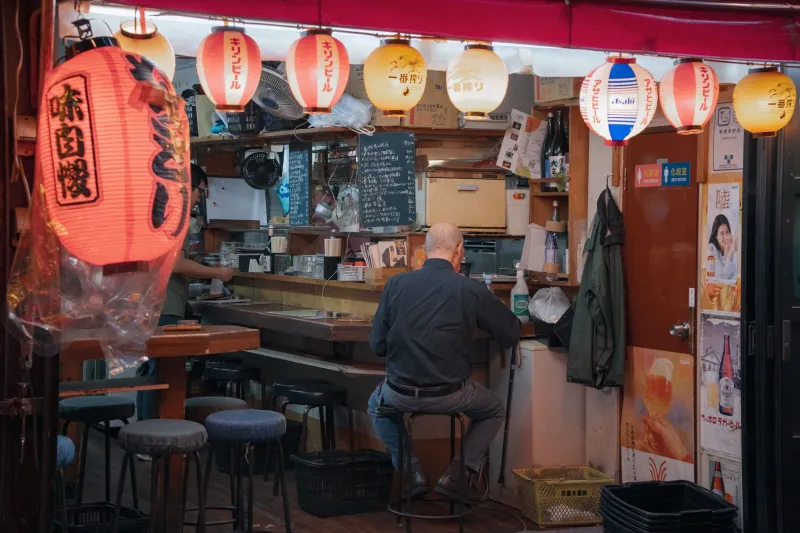
The Japanese bars that get this right — the tiny counters, the jazz kissas, the izakaya that somehow stay convivial without shouting — treat sound as part of the service. Not an afterthought, not a branding exercise. The volume is set so that a conversation can happen without effort, so that a plate of gyoza can be discussed, so that a cocktail can be tasted rather than just drunk. The hush isn't a gimmick. It's a decision.
Volume Is Not Atmosphere
British bars have spent years conflating loud with lively. A busy Friday needs a busy soundtrack; a quiet Tuesday needs the same playlist turned up to convince people they're having fun. Music becomes filler, a way to paper over the gaps in a room that hasn't quite filled. The result is a strange kind of hospitality: you're welcome, but you'll have to shout.
In Japan, the approach is often the opposite. An izakaya can be raucous — don't mistake quiet for solemnity — but the sound is tuned. Staff speak at a low pitch. The music sits under the conversation rather than over it. The clatter of plates and the odd burst of laughter are allowed to be the texture of the room. Nobody is trying to win an argument with a speaker.
The distinction matters because sound is the one design element that guests can't opt out of. Lighting can be softened with a squint. A wobbly stool can be swapped. But a room at 85 decibels is a room where nobody can hear the specials, the story behind the sake, or the person across the table. That's not atmosphere. That's an obstacle.
What Volume Does to the Plate and the Glass
Small plates are a conversational format. You order a few things, you pass them around, you talk about what works. If the room is too loud, that conversation collapses into nods and pointing. People eat faster. They drink faster. They leave earlier. The menu was designed for lingering, but the room was designed for turnover.
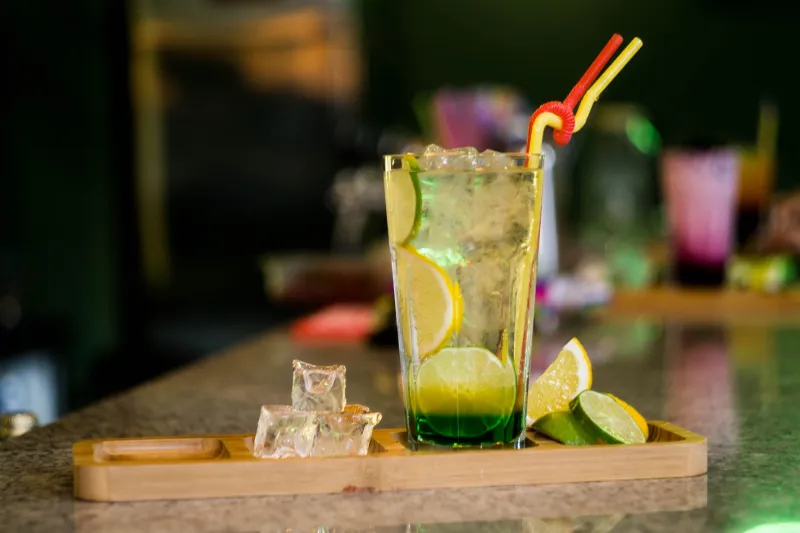
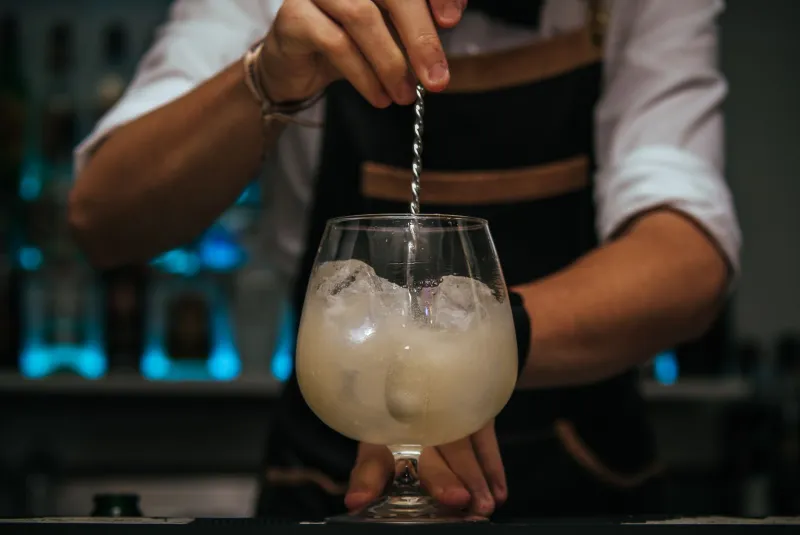
Cocktails suffer in the same way. A good drink has a beginning, a middle and an end — the first cold sip, the point where the ice starts to dilute, the last trace of garnish on the nose. In a quiet room, you notice those shifts. In a loud one, you notice the volume. The drink becomes a prop rather than the point.
There's a reason so many Japanese-inspired bars keep the music low and the lighting low together. Both are asking the same question: what do you want guests to pay attention to? If the answer is each other, the food and the drink, then the room has to get out of the way.
The Izakaya Lesson: Tuned, Not Silent
It's tempting to turn this into a argument for silence, but that's not quite right either. A completely silent bar can feel tense, like a library with drinks. The Japanese approach is usually calibration rather than muting. The room has a floor and a ceiling: enough sound to feel alive, not so much that it feels like a competition.
That calibration shows up in small choices. Speakers are placed away from seating rather than directly above the counter. Playlists have dynamics — a little lift, a little fall — instead of a flat wall of beats. Staff read the room and turn it down when guests start leaning in. Nobody makes a performance of it. The volume just quietly adjusts, the way a good host adjusts the lighting when the sun goes down.
A Checklist for Diners
If you're booking a night out and want to actually hear it, a few things are worth looking for.
- Do a sound check before you sit down. Stand at the door for ten seconds. Can you hear the person you're with at normal speaking volume? If not, ask for a different table or a different room. If neither exists, believe the room.
- Notice when you start shouting. The moment you're leaning across the table is the moment the bar has stopped being hospitable. You can ask staff to turn the music down. A good bar will. A bar that won't has told you something.
- Choose the counter over the corner. Counter seats are often away from the main speaker and close to the action in a good way — the clatter of the pass, the shake of the tin, the low hum of conversation.
- Book earlier if you want calm. The same room at 6pm and 9pm are two different bars. If you want small plates and a proper conversation, the early sitting is usually the one.
- Don't ask a quiet bar to become a party. If you want volume, go where volume is the point. The quiet room is not a failure of atmosphere; it's a different offer.
A Checklist for Operators
For anyone running a Japanese-inspired bar or kitchen, sound is a hospitality decision, not a technical one.
- Set a target, not a vibe. Decide what a normal conversation should sound like in the room and measure it. If guests have to raise their voices to order, the music is too loud — full stop.
- Zone the room. Keep speakers away from seats, especially the counter. Let the bar and the back room have different levels. A single volume for the whole space is a blunt instrument.
- Train the turn-down. Staff should feel allowed to lower the music when the room fills, not just when someone complains. The busier it gets, the more the room needs a lower ceiling of sound.
- Soften the hard surfaces. Curtains, felt, plants, upholstery — anything that stops sound bouncing off glass and plaster will make the room feel calmer without turning it into a library.
- Let the playlist breathe. Music with dynamics gives the room a pulse. A non-stop wall of sound flattens everything, including the food.
The Quiet Arithmetic of a Longer Night
A quiet room changes the maths of an evening. People stay for a second cocktail because they're still talking. They order one more small plate because the first ones had a chance to be noticed. They leave feeling like they went somewhere rather than survived something.
That's the real argument for turning it down. Not nostalgia for some imagined polite past, and not a rule for its own sake. Just the simple fact that a bar is a room for people, and people are easier to hear when the room isn't shouting over them. The best Japanese bars sound like a whisper because they want you to lean in — not to catch the music, but to catch each other.