The Pour That Isn’t Yours: A Japanese Habit That Slows the Whole Table
A British round has a lot going for it. It is democratic, it is generous in its way, and it saves a fortune in awkward card-machine choreography. But it also has a clock inside it. Someone buys four pints, everyone feels obliged to keep pace, and before long the table is running on a timetable nobody quite agreed to. The glass becomes a unit of progress rather than something to enjoy.
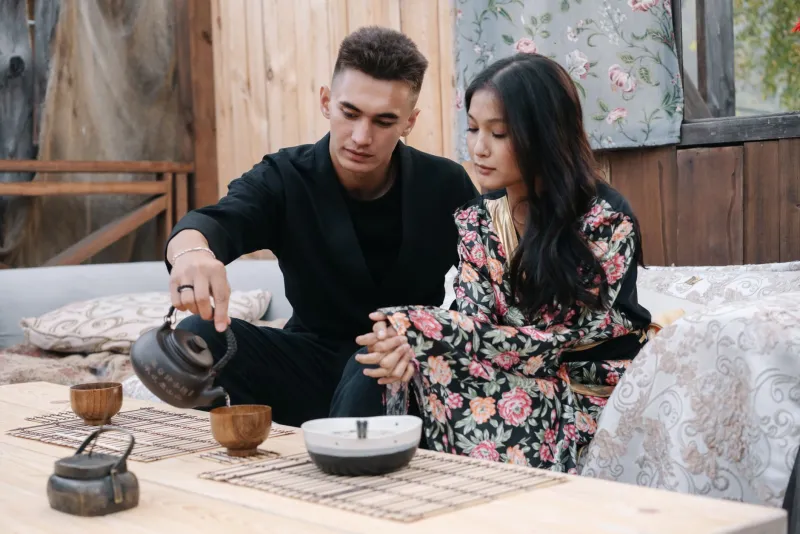
Japan has a different reflex. When you drink with others, you keep an eye on their glass. If it is getting low, you pick up the bottle and pour. They do the same for you. You do not generally fill your own. The custom is often called oshaku — pouring for someone else — and it sounds like etiquette, but it behaves more like attention. It turns the table into a place where people are noticed.
That is not a small thing. In a pub, we are often together but looking after ourselves: my drink, my round, my turn. Oshaku asks you to look sideways. It makes the evening a little less transactional and a little more observant. And, almost as a side effect, it slows the whole thing down.
The round is generous, but it has a finish line
Round-buying is one of the better British social inventions. It is a ready-made way to include people, and it means nobody has to keep a spreadsheet of who owes what. But rounds are also built for momentum. They arrive in batches. They are drunk in batches. The next round is a deadline, even when nobody says so.
Oshaku has no batch. It is continuous and small. You pour a little, someone sips, conversation carries on. There is no announcement, no tray arriving, no sense that a new phase of the night has begun. The rhythm is closer to topping up a teapot than lining up a set of pints. That alone changes how quickly a table gets through its drinks.
It also changes what you are doing with your hands. In a British pub, your hand is mostly on your own glass. In an oshaku habit, it is often on the bottle, hovering near someone else’s glass, waiting for the right moment. That is a surprisingly sociable place to put your attention.
What oshaku actually asks of you
The first thing to say is that this is not a licence to push drink on anyone. The ritual works because it is gentle and optional. You offer; they accept or decline. You pour a modest amount rather than filling the glass to the brim. You do not make a performance of it. The point is not to get someone drunk. The point is to notice them.
In Japan, the gesture comes with small pieces of choreography: hold the bottle with two hands, let the other person hold their glass, pour a little, wait. You do not have to import every detail into a bar in the UK. But the underlying logic travels well. Look at the glass. Notice when it is low. Offer before you are asked. Let someone else do the same for you.
The non-drinkers at the table are not excluded from this. Oshaku is about the act of pouring and receiving, not the alcohol content. A soft drink, a sparkling water, a cup of tea — the same principle applies. If anything, that makes the habit more useful, not less. It gives everyone at the table a way to be generous without turning the night into a competition.
Why it slows the night down
When you are pouring for other people, you cannot be quite as focused on your own consumption. Your glass stays a little lower for a little longer. You take turns. You wait. The evening develops a pulse rather than a sprint.
There is also a conversational effect. A round tends to interrupt: someone goes to the bar, the table breaks up, the story pauses. Oshaku is interstitial. It happens while the story is still going. You top up a friend’s glass mid-sentence and they carry on talking. The gesture becomes part of the conversation rather than a break from it.
That is the sort of thing that makes a night feel longer in the good way. Not because you drank more slowly out of discipline, but because the evening had more small hinges in it. More noticing. More chances to think, oh, they are nearly empty. More reasons to stay at the table rather than checking the clock.
The bar’s job is to make it feel ordinary
A ritual only works if it does not feel like a workshop. Nobody wants to sit down and be taught how to pour. The bar can do a lot simply by making the equipment feel normal: a carafe on the table, small cups, a bottle within reach, staff who pour without fuss. The suggestion is built into the setting.
At Bar Ikigai, that fits the room better than a set of instructions ever could. Small plates arrive in stages. Glasses are topped up as they empty. There is no pressure to order the next round all at once, and no sense that the table has to move in lockstep. The bar can nudge the habit along by making it easy — a shared bottle, a jug of water, a dish that asks to be passed rather than plated individually.
The staff should not turn it into a rule, either. The moment someone feels watched for not pouring, the gesture dies. Oshaku is hospitality, not homework. It works best when it looks like nothing much: a quiet offer, a small pour, a nod of thanks.
How to try it without making it weird
Start with one person. If their glass is low, offer the bottle. Do not fill it to the top. Do not make a speech. If they say no, move on. The next time, they may pour for you. That is the whole thing.
It helps to keep the table small and the pace unhurried. A long table of twelve can turn any gesture into a relay race. Four or five people around a shared bottle is closer to the spirit. Order a few small plates, let the drinks arrive gradually, and see what happens when nobody is in charge of the next round.
Britain does not need to abandon the round. It is too useful, too warm, too deeply built into a Friday night. But there is room alongside it for something quieter: the small pour, the glance at a friend’s glass, the decision to look after someone else for a moment. It does not make the night slower by force. It makes it slower by attention. And that is usually the part worth remembering.