The Four-Circle Myth: Finding Ikigai at the End of the Bar
The word ikigai has had a rough ride in Britain. Search it on a design mood board and you will find four overlapping circles, neatly labelled: what you love, what you are good at, what the world needs, what you can be paid for. The middle is meant to be your purpose. It is a tidy image, and it has spread through UK Pinterest boards, LinkedIn posts and glossy planner pages like a persistent weed. The trouble is that it is not really what the word means.
At Bar Ikigai, we named ourselves after a word that gets borrowed, laminated and turned into a keynote slide. So let us clear something up. The Venn diagram is not the whole story. In everyday Japanese, ikigai is less a career strategy than a reason to get up in the morning — or, on a good night, a reason to stay out another hour. It is not a revelation. It is a repetition.
The diagram that ate the word
The four-circle version is appealing because it promises a clean answer. It suggests that purpose can be calculated, that if you shuffle your skills and passions into the right order you will eventually arrive at a single, defensible life sentence. It is the same instinct that turns every hobby into a side hustle and every dinner into content. Nothing is allowed to be ordinary. Everything has to be going somewhere.
That is a very British sort of anxiety dressed up as Japanese wisdom. We like the idea of purpose because we are suspicious of pleasure. We want our free time to justify itself. We want the bar to be a networking opportunity, the walk to be a wellness practice, the cocktail to be a story about terroir. The Venn diagram flatters all of that. It makes ikigai sound like a performance review you can do on yourself.
But the word does not need the pressure. In Japan, ikigai is often used in a much smaller, more everyday way. It can be a morning cup of tea, a grandchild, a garden, a weekly visit to a favourite shop, a craft you keep returning to. It is not necessarily grand or public or monetisable. It is the thing that makes the day worth getting up for, even if the day is ordinary. Especially if the day is ordinary.
What the word does at 11pm
At 11pm, nobody needs a four-circle diagram. At 11pm, purpose is a much more physical thing. It is the feeling of walking into a room where someone knows what you are going to order. It is the second drink you did not plan to have because the conversation had not finished yet. It is the low hum of a neighbourhood bar on a Tuesday, when the night has stopped performing and started settling.
That is not a small thing. Britain is good at many kinds of drinking, but we are often less good at the unhurried, repeatable kind. We celebrate the big night out, the birthday, the leaving do, the occasion. We are less practised at the ordinary night out: the same week, the same few hours, the same corner. Yet that is where most of us actually live. The grand revelations are rare. The ordinary rituals are not.
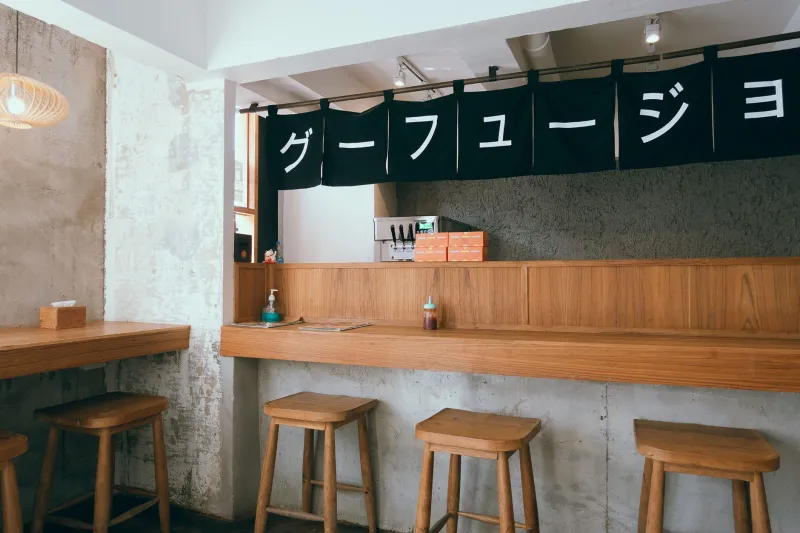
A bar like ours is not a temple to purpose. It is a room with plates, glasses and a bit of lighting. But it can be one of the last places in a British town where the small kind of ikigai still happens without anyone calling it that. You do not have to book a retreat or buy a journal. You just have to turn up often enough for the place to know you.
A bar is a small, reliable anchor
There is a reason regulars matter in hospitality. They are not just a reliable till. They are the people who give a room its memory. The same faces behind the counter. The same first order. The same little exchange about the weather, the football, the fact that the good seat by the window is free. None of it sounds meaningful on paper. In practice, it is the scaffolding of a week.
Small plates work in the same way. You do not need a tasting menu to feel looked after. You need a few things that arrive at the right pace, a drink that fits, and enough time to notice you are enjoying yourself. The best bars are not trying to change your life. They are trying to give you a decent hour and a half, repeatedly, until the decent hour and a half becomes part of your life.
That is a modest ambition, and it is under threat. Rents are high, habits are shifting, and the neighbourhood bar has to work harder than ever to justify its place. But the answer is not to become a spectacle. The answer is to become a fixture. Somewhere you recognise and somewhere that recognises you back.
The same stool is not a rut
We are told to avoid repetition. Variety is supposedly the spice of life, and routine is what happens when you have given up. But that is a strange way to think about the things that actually hold us together. You do not call a friendship a rut because you see the same person every week. You do not call a favourite song a failure of imagination because you play it again. Repetition is how care becomes visible.
The same stool can be a rut if you are hiding on it. But it can also be a small act of belonging. The same first drink can be a ritual rather than a lack of adventure. The same faces behind the counter can be a reminder that you are part of a place, not just a customer passing through it. At 11pm, that is worth more than a diagram.
A prompt, no journal required
So here is a practical, unpretentious way to think about ikigai this week. Do not draw four circles. Do not write a mission statement. Just notice three small anchors you already return to. It might be the café where they start your order before you speak. The walk you take when you need to think. The bar where the seat by the window is usually free. The friend you text on the same day each week.
Then ask yourself one question: do you give those anchors enough room? Not everything has to be productive. Not everything has to be impressive. Some things are worth doing simply because they make the ordinary week feel more like yours.
That is what ikigai means at 11pm. Not a Venn diagram. Not a career plan. Not a life sentence. Just a reason to get up in the morning, and sometimes a reason to stay out another hour. We named a bar after it because we like that version better. It is smaller, yes. But it is also the one you can actually use.